Pantry Cabinetry in Bozeman, MT | Walk-in, butler and pull-out pantries with nothing lost at the back
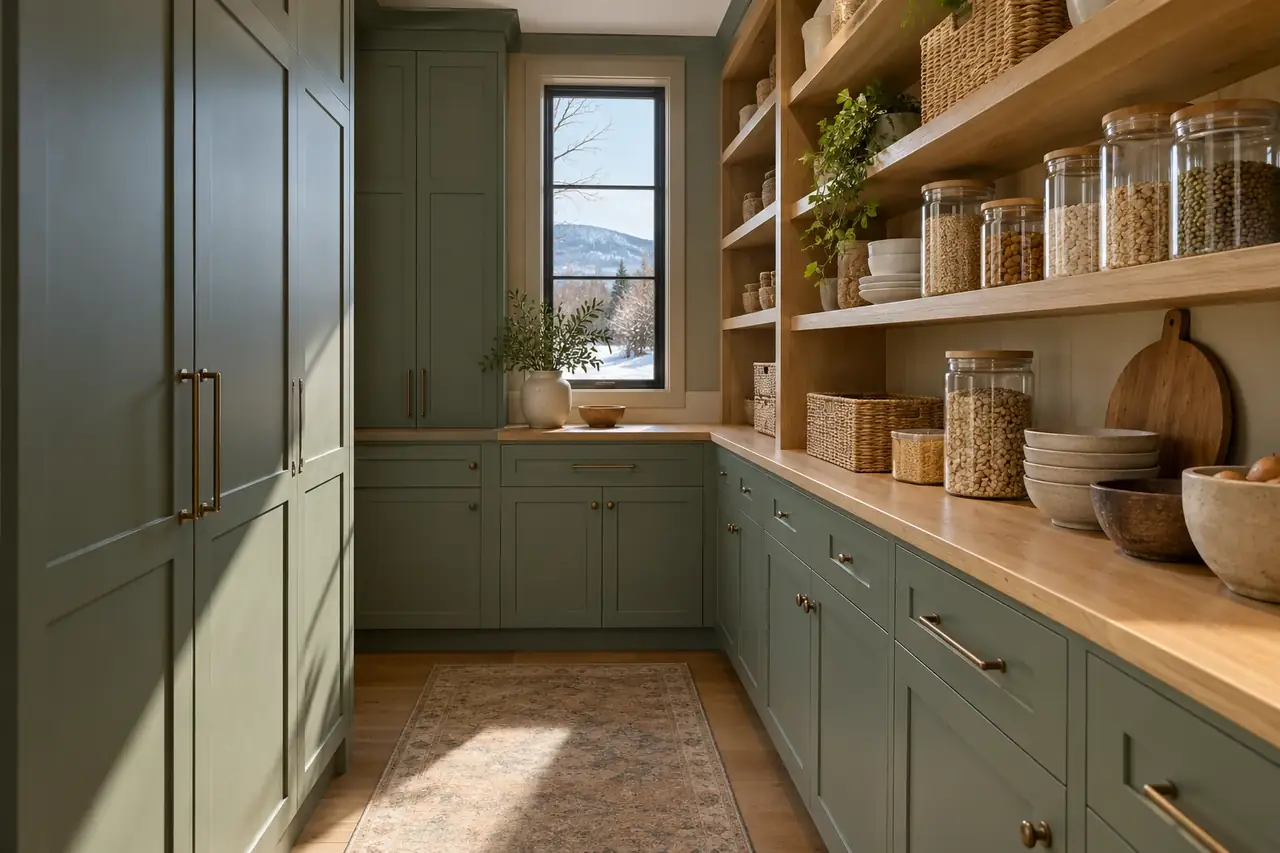
At Custom Cabinets Bozeman MT, we build pantry cabinetry that ends the lost can at the back of a deep shelf: walk-in pantries, butler pantries between kitchen and dining room, and tall pull-out units for kitchens without space for a room. Shelf depth is set by what you store, not by habit.
Free design consultationTell us about the room. We call back to book a measure.
Pantry Cabinetry in and around Bozeman MT
Most pantries are too deep. A 24-inch shelf holds cans three rows back, and the back row expires unseen. We design pantry shelving at depths that keep everything visible, add drawers for bulk goods, and use pull-outs where a deep cabinet cannot be avoided.
A builder pantry compared with our pantries
| The usual approach | How we do it |
|---|---|
| Deep wire shelves where cans hide three rows back. | Shallow wood shelves where every label is visible. |
| Shelves at fixed heights. | Adjustable shelving for tall bottles and cereal boxes. |
| Bulk bags on the floor. | Deep drawers for flour, rice and pet food. |
| Appliances on the kitchen counter. | A pantry counter with outlets for mixers and toasters. |
Pantry dimensions we work to
- Shelf depth
- 12 inches for cans and jars, 16 inches for bulk
- Pull-out width
- 12 to 24 inches on a full-height runner
- Counter height
- 36 inches, or lower for baking
- Walkway
- At least 36 inches in a walk-in
How a pantry project runs
Inventory
We look at what you store, and how much in bulk.
Layout
You approve shelf depths, drawers and counter zones.
Build
Shelving, drawers and pull-outs are built in the shop.
Install
We fix, level and set shelf heights with you.
What makes a pantry work
- Shelf depths of 12 to 16 inches so nothing hides behind.
- Pull-outs and drawers for heavy bulk items and appliances.
- A counter zone for small appliances with outlets planned in.
- Adjustable shelves on 32 mm system holes.
Pull-outs when space is tight
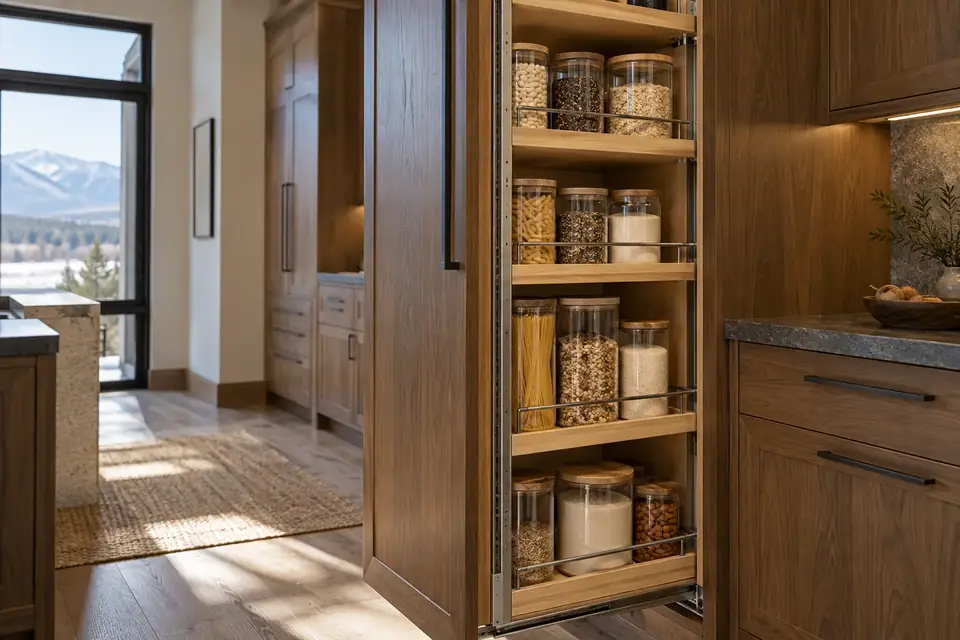
Not every kitchen has room for a walk-in. A 15 or 18-inch tall pull-out holds as much as a small closet and brings every shelf into view when it slides out. We build the unit on a heavy full-height runner rated for a fully loaded pantry.
Inside, adjustable shelves with rails keep jars from sliding off when the unit moves. It is one of the most efficient pieces of storage in a kitchen per inch of wall.
Why pantries fail to work
| What goes wrong | Why it happens | What we do about it |
|---|---|---|
| Food expires at the back | Shelves too deep. | We use shallow shelves and pull-outs. |
| Pull-out sags and drags | Undersized hardware for the load. | Full-height runners rated for pantry loads. |
| Clutter on the floor | No home for bulk items. | Deep drawers at the base. |
Pantry details we recommend
Lighting
A walk-in pantry needs good light. We plan LED strips under shelves or a motion sensor light.
Ventilation
Potatoes and onions keep longer in ventilated drawers with slatted fronts.
Butler pantry sinks
A small sink in a butler pantry needs a plumbing permit, so we plan with your plumber.
Doors
A pocket or barn door saves swing space at a tight pantry entrance.
Smaller can be better
A shallow, well-planned pantry often holds more usable food than a big, deep one. We would rather design a smaller room that works.
Pantry Cabinetry: terms we use
- Full-height runner
- A heavy slide mounted top and bottom that carries a tall pull-out pantry. It spreads the load across the whole unit so the cabinet glides smoothly even when every shelf is packed with cans and jars.
- 32 mm system
- A European standard of evenly spaced holes drilled 32 millimetres apart inside a cabinet. Shelf pins, hinges and runners all line up with it, which makes adjustable shelving simple and precise.
- Gallery rail
- A low rail or rod across the front of a shelf that stops jars and bottles sliding off when a pull-out moves or a door opens. It is essential on pantry pull-outs.
What drives pantry cabinetry cost
Pantries range from simple shelving to full cabinetry rooms. These factors change the price most.
Drawers and pull-outs
Each drawer or pull-out adds hardware and build time.
Closed versus open storage
Doors cost more than open shelves.
Counter and backsplash
A work counter with a backsplash adds material and trades.
Dry pantries and wood shelves
A Montana pantry is rarely damp, which is good for food and gentle on wood. The challenge is the other direction: wide solid wood shelves in a dry room can shrink and cup across their width over a winter.
We build pantry shelves from 3/4-inch plywood with solid wood edging, which stays flat, or from narrow solid boards finished on both faces. Both hold heavy jars without sagging at our standard spans.
Stocking up for a Montana winter
Many households outside town buy in bulk, because a snowy trip to the store in January is not always a quick errand. A rural pantry near Bozeman often holds 25 or 50-pound bags of flour and rice, canned goods from the garden and a chest freezer. Those loads need drawers and shelves built for weight, and floor space for the freezer with ventilation around it.
Home canning is common here too. Mason jars are heavy and fragile, so we build canning shelves shallow enough to hold one jar deep with a small front lip, and we keep them away from exterior walls where a cold spell could freeze and crack a jar.
Before your pantry consultation
- Rough counts of what you keep in bulk.
- Appliances you want off the kitchen counter.
- Tallest items, such as cereal and bottles.
- Whether the pantry has power and light.
Butler pantries
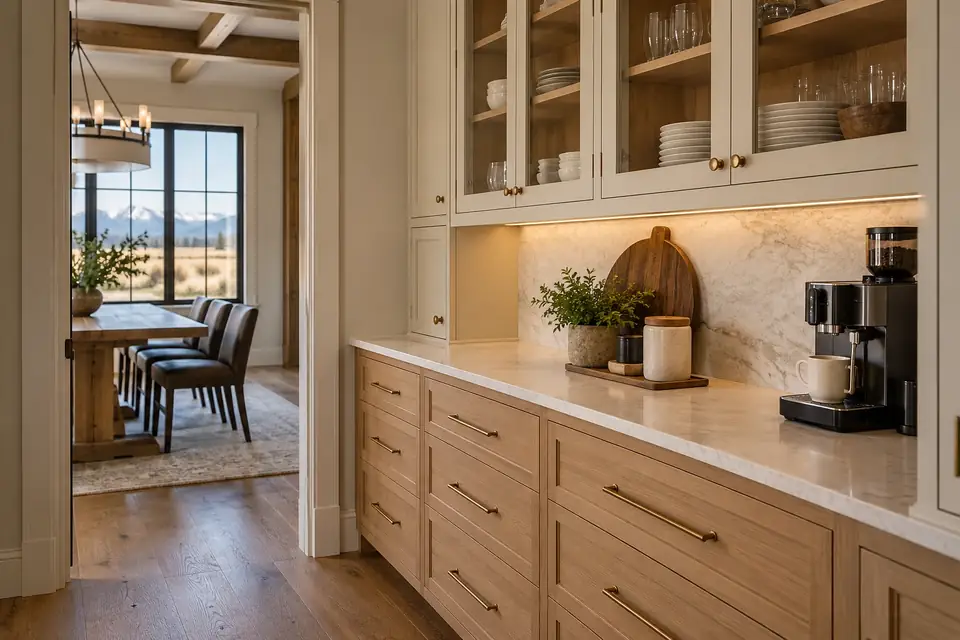
A butler pantry sits between the kitchen and the dining room, holding serving pieces, glassware and a coffee or drinks station. It keeps the kitchen counter clear during a dinner party and gives dishes a place away from the cooking. Glass-front uppers keep serving pieces visible and dust-free, deep drawers below hold linens and platters, and a stretch of counter doubles as a buffet when you host.
Questions about pantry cabinetry
How deep should pantry shelves be?
Twelve inches suits cans, jars and boxes, and keeps every item visible. Sixteen inches suits bulk items and small appliances. Deeper shelves hide food at the back. We mix depths in one pantry to match what you store.
Is a pull-out pantry better than shelves?
In a kitchen without room for a walk-in, a tall pull-out is excellent because every shelf comes to you. In a walk-in pantry, fixed shallow shelves work well and cost less. We often combine both.
Do I need a permit to add a butler pantry in Bozeman?
The cabinets do not need a building permit under IRC R105.2. A sink needs a plumbing permit and new outlets need an electrical permit, both issued by the City of Bozeman. If a wall comes out to make the space, that structural work needs a building permit.
Can a pantry have a counter for appliances?
Yes, and it is one of the best uses of a walk-in pantry. We build a counter at 36 inches with outlets above it, so mixers, toasters and coffee makers live plugged in and ready.
What wood is best for pantry shelves?
Plywood with a solid wood edge is the most practical choice. It stays flat and strong. Solid wood shelves look great but need to be narrow and finished on both sides to avoid cupping in dry winters.
How do you light a walk-in pantry?
LED strip lights under shelf fronts light each shelf evenly. A motion sensor switch turns them on when you walk in. We plan the wiring route with your electrician.
How long does pantry cabinetry take to install?
A walk-in pantry usually installs in one or two days. A single pull-out unit fits within a day. Shop time comes first after design approval.
Can you convert a coat closet into a pantry?
Often yes, if it is near the kitchen. We fit shallow shelves, a pull-out or door-mounted racks, and it becomes a very efficient pantry. We check the depth and door width first.
What is the best way to store mason jars in a pantry?
Shallow shelves one jar deep with a small front lip keep jars visible and stop them sliding off. We keep canning shelves on interior walls, away from cold exterior walls and sunlight, and space them for the jar sizes you use most.
Can a pantry hold a chest freezer?
Yes, if the room has space and ventilation. A chest freezer needs clearance around it for air, and it adds warmth to the room. We leave a bay with open space above and a nearby outlet, and keep wood shelves a few inches clear of the freezer lid.
Work that pairs with pantry cabinetry
Pantry work usually connects to the kitchen. These services are often part of the same project.
- Kitchen Cabinets
- Custom Cabinet Design
- Laundry Room Cabinets
- Cabinet Installation
- Shaker Style Cabinets
- Painted Cabinet Finishes
Every jar visible, nothing forgotten at the backWalk-in, butler and pull-out pantries with shelf depths planned around your food.
Call 406-521-7523